class: center, middle, inverse, title-slide # Case Studies and Consulting <br>in Statistics<br> ## <font color=red> SSC Annual Meeting </font> <br> <font size=6 color=red> Calgary, May 26-29 2019 </font> <br style=line-height:2><br> Gabriela Cohen Freue ### <font size=6> Department of Statistics, University of British Columbia</font> --- ## Overview - **STAT450: Case Studies in Statistics** - real case study - statistical & computational & communication skills - **STAT550: Techniques for Statistical Consulting** - early involvement in Consulting - statistical & computational & communication skills - mentoring and/or supervisory role - **A joint model: real consulting project** - gains - challenges --- ## STAT450: Case Studies in Statistics **Learning Objectives:** - understand how the data was collected - organize the data in a way that can be analyzed - analyze the data using appropriate statistical methods - interpret the results - present and communicate the results --- ## STAT450: <font color=red>Case Studies </font> in Statistics ### Learning Objective - understand how the data was collected - organize the data in a way that can be analyzed - analyze the data using appropriate statistical methods - interpret the results - present and communicate the results ###<font color=red>Real Case Studies </font> - from graduate students and research faculty in other disciplines - from collaborators - from agencies and units (inside and outside UBC) --- ## STAT450: <font color=red>(Real) Case Studies </font> in Statistics ### Statistical Consulting Experience <font color=white> - understand how the data was collected - understand how the data was collected <font color=black> - understand how the data was collected - organize the data in a way that can be analyzed - analyze the data using appropriate statistical methods - interpret the results - present and communicate the results --- ## STAT450: <font color=red>(Real) Case Studies </font> in Statistics ### Statistical Consulting Experience - **understand the "client's" question** - **understand the context of the study** <font color=grey> - understand how the data was collected - organize the data in a way that can be analyzed - analyze the data using appropriate statistical methods - interpret the results <font color=black> - **present and communicate the results** - ###This process is NOT linear!! --- ## Most Statistics Programs <font color=grey> - understand the "client's" question - understand the context of the study <font color=black> - **understand how the data was collected** <font color=grey> - organize the data in a way that can be analyzed <font color=black> - **analyze the data using appropriate statistical methods** <font color=grey> - interpret the results - present and communicate the results --- ## Challenge - Not all students are ready to handle a real analysis - Statistical methodology - Computational literacy - Communication skills ##Features of the course: - to put in **real practice** the methodologies learned in the program - to learn new methodology as required by the goals of the study - to experience a **full** and **open-ended** data analysis process - to build collaborative relationships with peers and researchers --- ## Building a collaborative model - Students work in groups of 2-4 - (If possible) each group works on a different case - Each "client" meets with his/her group (at least) 3 times during the term: - **1st meeting**: introductions and presentation of case and data - **2nd meeting**: presentation of preliminary results - **3rd meeting**: poster session for presentation of final results --- ## Support: multiple channels - Each group is supervised by an instructor/TA - Extra support to improve communication skills - Many in-class and out-of-class discussions with the groups - Weekly seminars to address statistical and computational challenges ## Is this enough?? -- - Probably not, but it's difficult to get additional resources - Extremely time-consuming course for a single instructor - The progress of the case needs to match that of the term --- <img src="gibbs_model.png" style="width: 85%" /> ### <font size=5><p align=right> from Professor Alison Gibbs, UT, Webinar 2012 </p></font> --- ## STAT550: Techniques for Statistical Consulting -- **Objectives** - promote an early involvement in statistical consulting - promote collaborative and interdisciplinary work - expose students to real data challenges - help students to - use and sharpen their statistical and computational skills - improve their communication skills - build a portfolio for future reference --- <img src="gibbs_model_ed.png" style="width: 85%" /> ### <font size=5><p align=right> from Professor Alison Gibbs, UT, Webinar 2012 </p></font> --- ## Our joint collaborative model <img src="cohen_model.png" style="width: 95%" /> ### STAT450: Case Studies in Statistics ### STAT550: Techniques for Statistical Consulting - both classes work on a real data case study - grad students mentor and supervised undergraduate students - undergraduate students are in-charge of most of the work --- ## Is this <font color=red>DATA SCIENCE </font>? -- 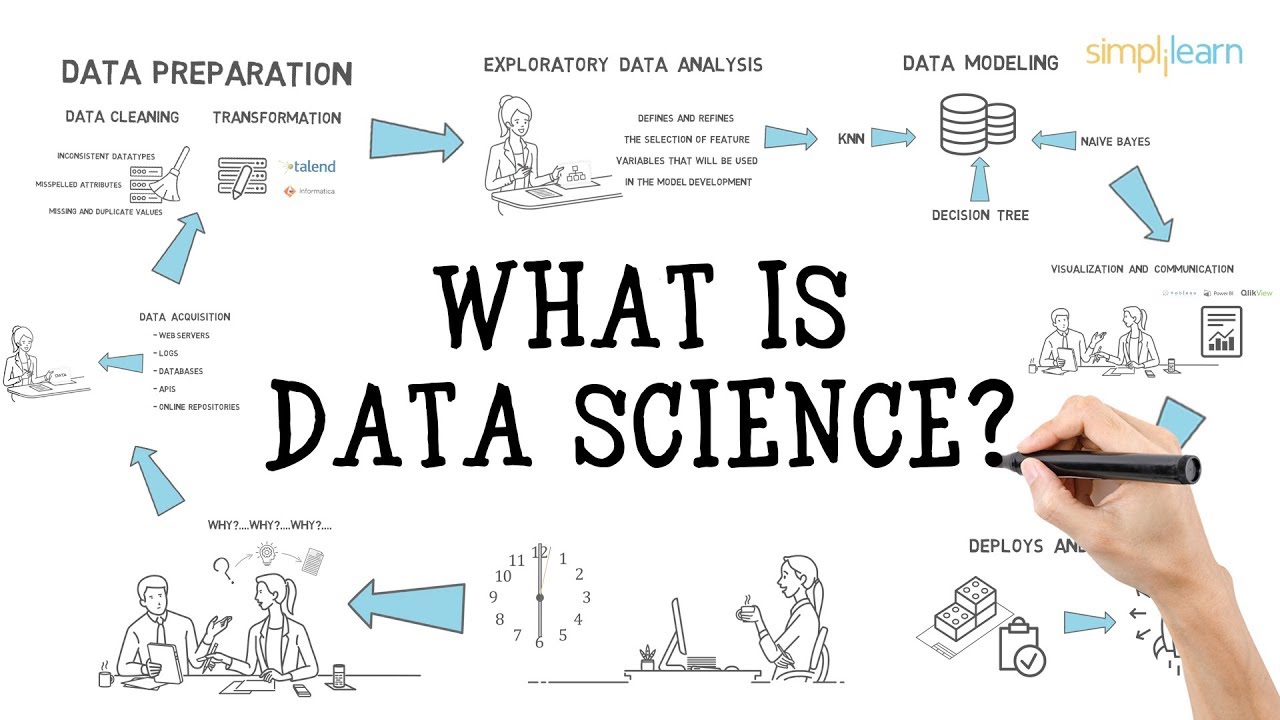 --- ##Data Science ### Not only **what** but also <font color=red>**how**</font> data analysis is conducted is relevant -- - transparent and reproducible workflow - data acquisition - data processing - data analysis - report of results -- - open communication and discussions - combination of F2F meetings and online discussions - accessible to all group members - stored (e.g., by topic) -- ### <font color=red>**Can/Should**</font> this be accomplished in Consulting courses?? --- ##Key components of our model <img src="cohen_model.png" style="width: 100%" /> ### Each group collaborates through a GitHub/GitLab repository - all relevant documents are version controlled (e.g., data, code, reports) - issues are used for discussions (students also like Slack) - can be easily transferred to the client at the end of the term ### Both classes meet regularly throughout the term --- ##Key componets of our model (cont.) ### Transparent and reproducible analysis - All coding is done in R - Reports are drafted using R Markdown reports (mandatory for the 1st report) - https://github.com/gcohenfr/Sikkim ### Emphasis on communication - Group oral presentations - At least 3 drafts of the final written report are evaluated - 1st report peer-evaluated by STAT550 - Final results are presented in an open poster session --- # Acknowledgements - Craig Burkett, Ed Kroc, Estella Qi, Dr. Sara Mostafavi - Amazing dedicated TAs in all terms - Dr. Tiffany Timbers and David Guo # THANK YOU! <img src="poster.jpg" style="width: 100%" />